
Thermics
Thermal engineering, research & modeling in intelligent cooling system(THERMiCs)
THERMiCs is a multidisciplinary research group advancing thermal engineering through heat transfer science, intelligent control, and advanced simulation. The group tackles thermal challenges in high-density electronics, energy storage, and compact devices where conventional cooling falls short. Using tools like CFD, FSI, and AI-driven optimization, THERMiCs develops sustainable, high-performance thermal solutions that enhance reliability and efficiency in next-generation technologies. Its work supports both industrial innovation and long-term energy sustainability.
Group members
|
Professor Ir. Dr. Mohd. Zulkifly Bin Abdullah (Chairman)
Area of Expertise: Electronic Packaging in 3D Packaging and TSV, Advanced Electronic Cooling for High Heat Flux, Porous Medium Burner for Domestic Applications |

|
Associate Professor Ir. Dr. Mohd Azmi Bin Ismail (Head)
Area of Expertise: Electronic Cooling, Anti-Icing, Spillway dam, Computational Fluid Dynamic (CFD), Heating, Ventilation and Air-Conditioning (HVAC) |
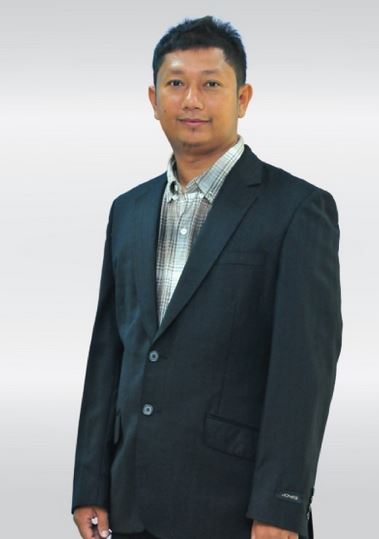
|
Associate Professor Dr. Yu Kok Hwa (Member)
Area of Expertise: Microfluidics, Superhydrophobic Surface, Turbulent Flow, Flow Stability, Heat Transfer, HVAC |

|
Ir. Dr. Ahmad Fikri Bin Mustaffa (Member)
Area of Expertise: Turbomachinery, Fluid Dynamics, CFD. |

Research capabilities
i) Numerical simulations
THERMICs has expertise spanning conventional CFD through more advanced multiphysics modelling. Its academic expertise includes CFD, thermofluids, turbomachinery, electronic packaging, renewable-energy systems, HVAC, heat transfer, and AI-assisted engineering simulation. In particular, staff profiles identify capabilities in finite-volume/finite-element multiphysics CFD, electronic cooling, and thermofluid systems. The CFD capability can therefore support modelling of fluid flow, conjugate heat transfer, natural and forced convection, turbulent flows, multiphase phenomena, thermal-fluid interaction and coupled physical systems. Applications extend from component-scale thermal problems to larger engineering systems such as electronics, HVAC, turbomachinery and renewable-energy equipment.
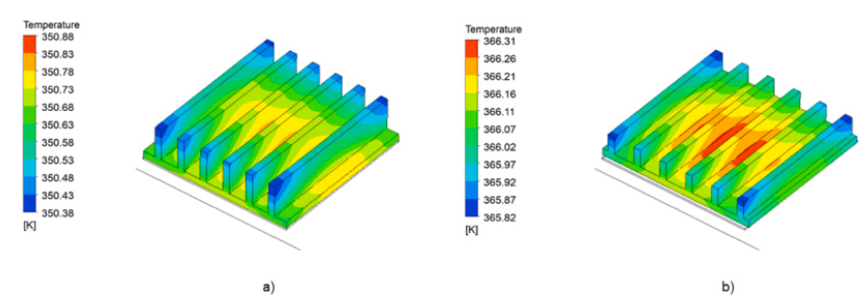
Figure: CFD simulation on heat sinks.
ii) Experimental
The 3D hot-wire anemometry capability complements CFD and thermal-fluid research by providing high-resolution experimental measurements of complex and turbulent airflow. Unlike a conventional single-wire probe, a three-dimensional or triple-wire probe can simultaneously resolve the three instantaneous velocity components, u, v, and w, enabling characterization of genuinely three-dimensional flow structures.
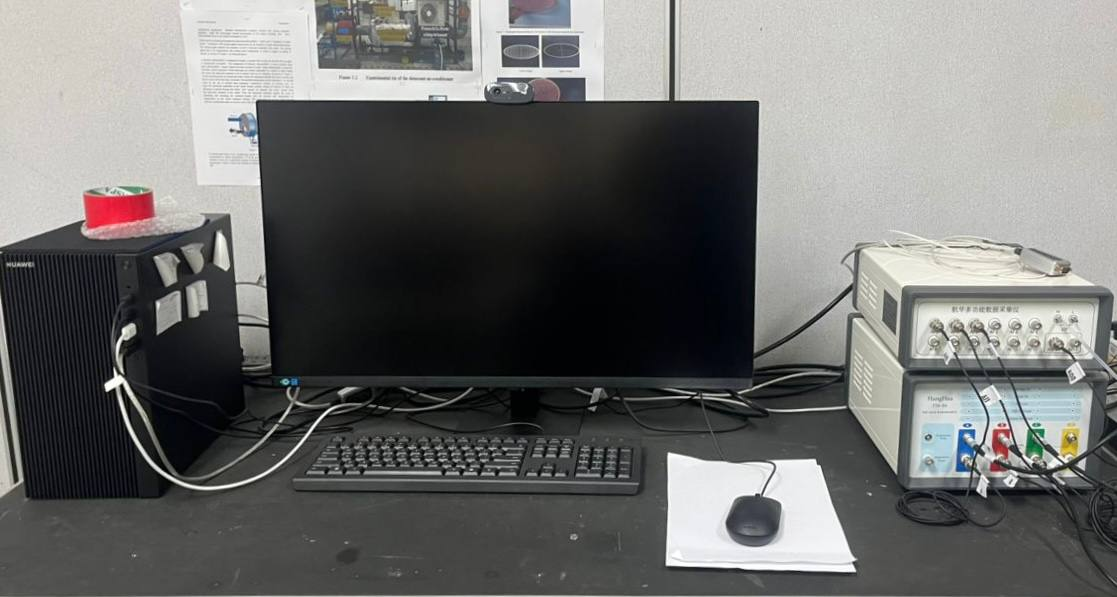
Figure: 3D Hot Wire Anemometer
Using the thermal conductivity equipment, this apparatus provides experimental capability for characterizing the heat-conduction properties of a broad range of engineering materials. According to the manufacturer, the apparatus is specifically designed to determine the thermal conductivity of solids, liquids, and gases, making it useful for both fundamental heat-transfer studies and material characterization.
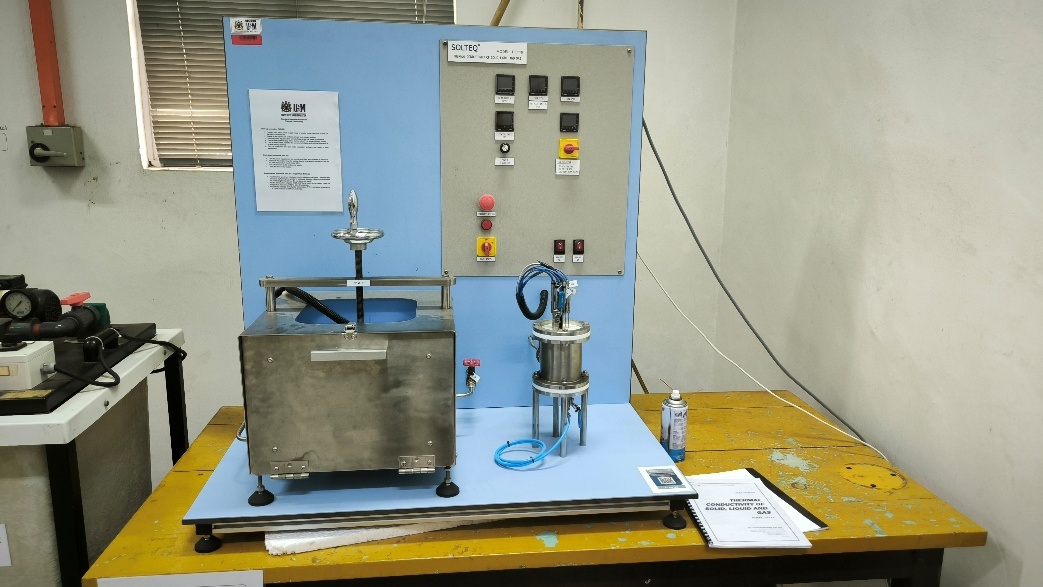
Figure: Heat conductivity equipment
In the research lab, air flow testing on the sample can be conducted using closed-loop wind tunnel. This equipment provides a controlled experimental facility for investigating aerodynamic, fluid-flow, and thermal-flow phenomena.
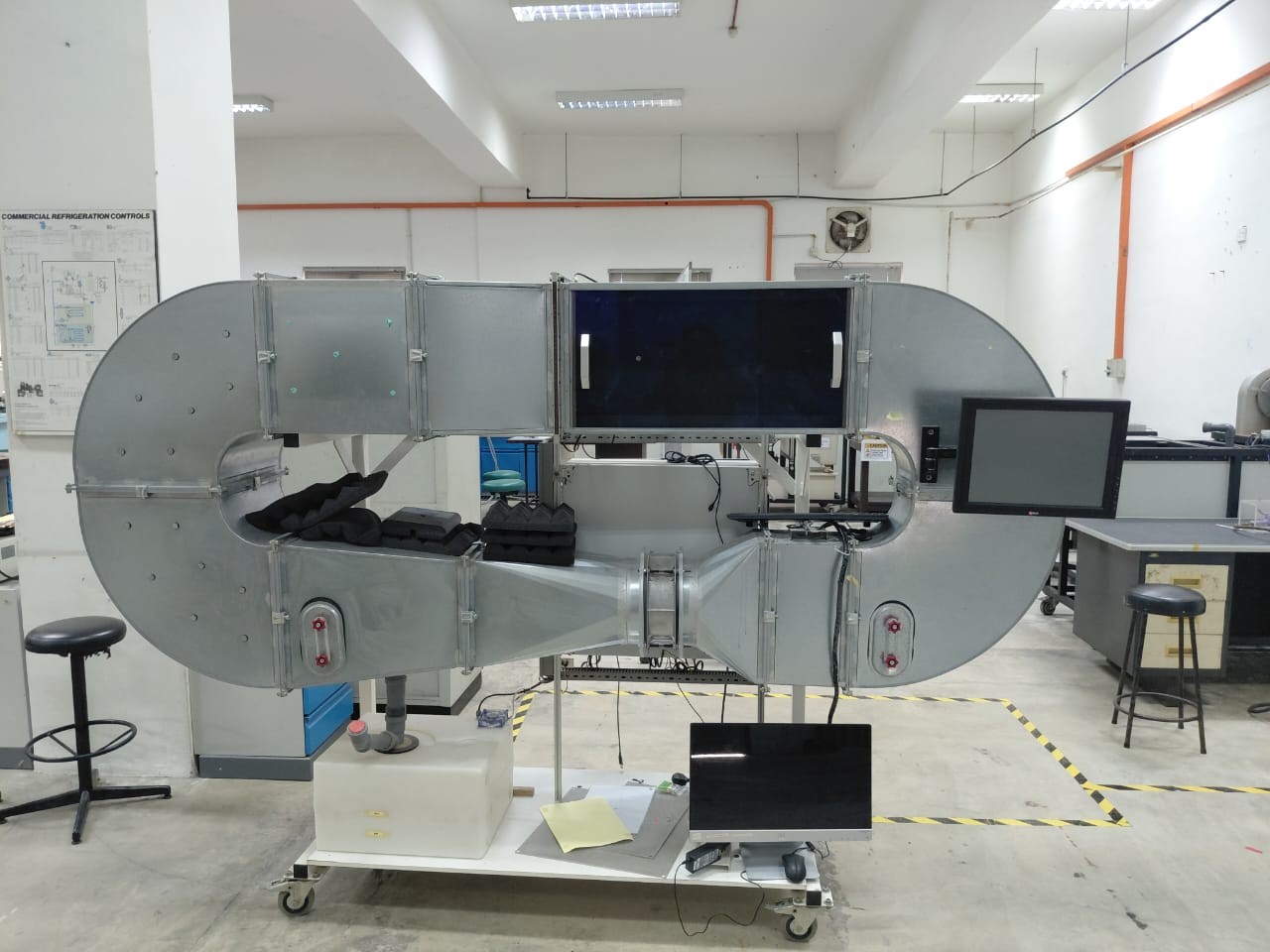
Figure: Wind tunnel
Selected publications
- Salih M.M.M., Ismail M.A., Alomar O.R. Al-Attab K.A.M., Energy, exergy, economic and environmental analysis of PV-assisted wavy solar air heater integrated with phase change material and air preheating, 2026, 298(2):131076.
- Salih M.M.M., Ismail M.A., Alomar O.R., Al-Attab K.A.M., Impacts of collector geometry on performance of solar air heater system under forced and natural air circulation processes, 2026.
- Talib A.J., Yu K.H., Eidan A.A., Chan K.W., Hatif I.H., Heat pipe integration in vapour compression refrigeration: Refrigerant-side enhancement, air-side heat recovery, and electronics thermal management, Renewable and Sustainable Energy Reviews, 2026, 230:116688
- Chin I, Loh W.K., Kee S.C., He Y., Abdullah M.Z., Tsuriya M., Experimental method to measure high-temperature hygroscopic swelling in epoxy mold compounds and dielectric build-up films, Journal of Electronic Packaging, 2025, 147(1):011009
- Ramalingam K., Abdullah M.Z., Abas M.A., Yu K.H., Kamarudin R., Rahman M.R.A., Wong S.F., Lam P.K., Cheah B.E., Semiconductor wafer in electronics packaging: a hybrid investigation with ML and experimental insights, The International Journal of Advanced Manufacturing Technology, 2025, 142:1765-1781.
- Sun P., Ismail M.A., Mustaffa A.F., Metamodel-based design optimization for heat transfer enhancement of finned heat sinks, International Journal of Thermal Sciences, 2025, 214:109896.
- Munas F.R., Khai L.C., Yu K.H., Mustaffa A.F., Muzathik A.M., Ismail M.A., Thermal performance comparison between bias acoustic liner and acoustic linear for aircraft anti-icing, Journal of Mechanical Science and Technology, 2025, 39:375-386.
- Soo Y.H., Yu K.H., Ismail M.A., Heat transfer enhancement of microchannel heat sink with water-droplet grooves: geometrical and grooves arrangement effects. Journal of the Brazilian Society of Mechanical Sciences and Engineering, 2025, 47(11):568
- Talib A.J., Yu K.H., Sulaiman A.D., Hassan M.S., Hawas M.N., Raheem A.T., Wong K.Y., Hatif I. H., Active mixing strategies for energy-efficient water dispensers: comparative experimental study of impeller and bubble injection in hot climates, Thermal Science and Engineering Progress, 2025, 65:103917
- Asoul M.B., Yu K.H., Al-attab K.A., Ismail, M.A., Puay H.T., Numerical investigation on heat transfer enhancement of graphene coated circular pin fin, Thermal science, 2025, 29(6B):4703-4714.
- Amin A.M., Hamzah W.A.W., Ismail M.A., Effect of diameter, twist angle, and blade count on the thermal-hydraulic performance of a decaying twisted swirler, Case Studies in Thermal Engineering, 2023, 50:103513.
- Tan S.A., Yu K.H., Abdullah M.Z., Heat transfer analysis on wafer annealing process in semiconductor multi-wafer furnace using CFD simulation, Journal of Mechanical Science and Technology, 2022, 36:3143-3151.
- Choong J.Y., Yu K.H., Abdullah M.Z., Numerical assessment of heat transfer performance of double-layered oblique fins microchannels heat sink with Al2O3 nanofluid, Thermal Science, 2021, 26(1B):477-488.
- Ahmad, M.I., Aziz ,M.S.A., Abdullah M.Z., Salleh M.A.A.M., Ishak M.H.H., Rahiman W., Nabialek M., Investigations of infrared desktop reflow oven with FPCB substrate during reflow soldering process, Metals, 2021, 11(8):1155.
- Narato P., Wae-hayee M., Abdullah M.Z., Nuntadusit C., Effect of pin inclination angle on flow and heat transfer charateristics for a row of pins in a flow channel, International Communication in Heat and Mass Transfer, 2020, 110:104396.